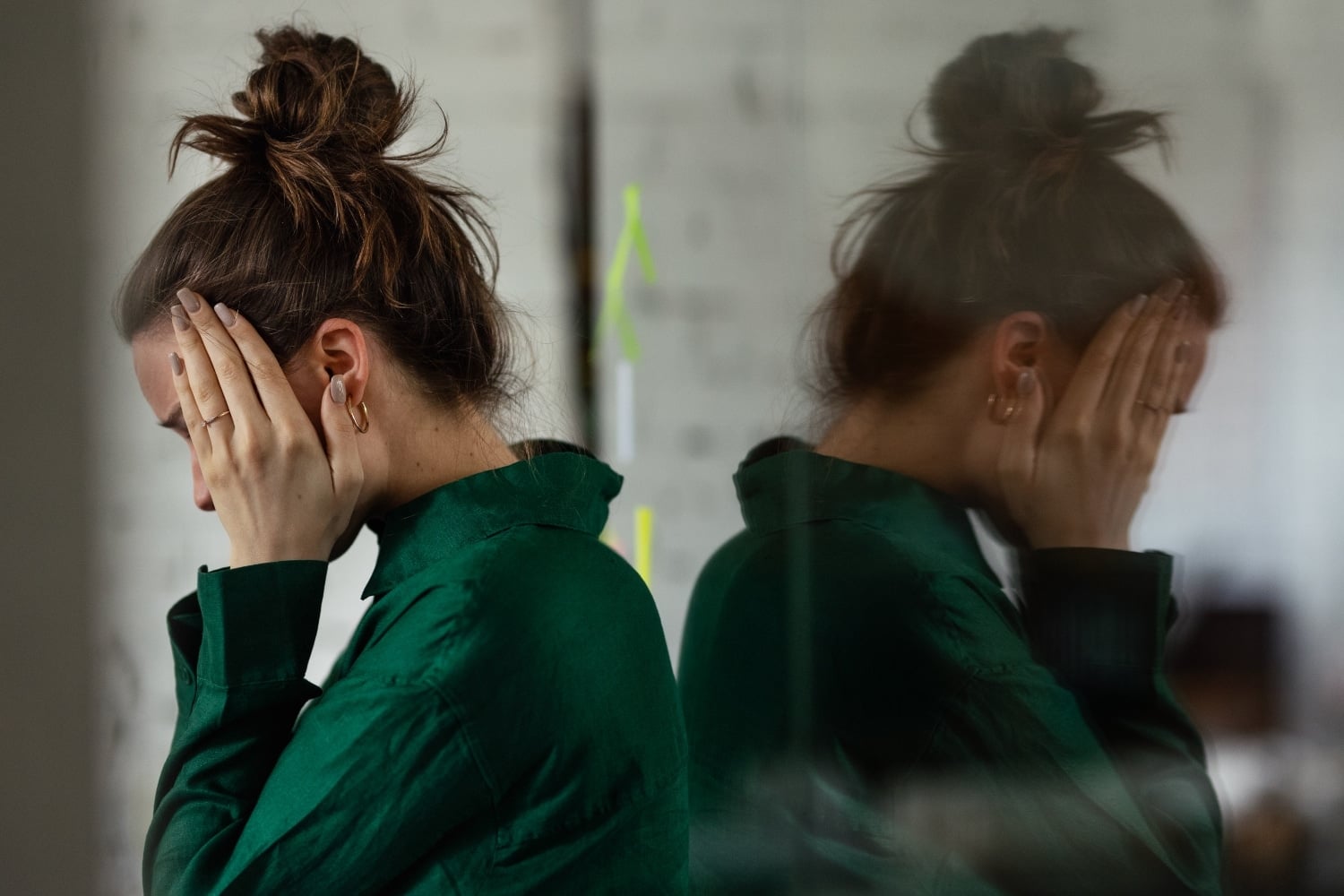
December: a glorious month of lights and colors and holiday fun. This is when the pace picks up, the expectations quadruple, and before you know it, every day feels more packed than the last one. Plenty of family and friend gatherings cover the calendar. And then of course, there are the travel plans, end-of-year deadlines, financial pressures, late-night messages, and the constant insistence that you should be feeling more festive than you actually do.
Stillness becomes the first thing to disappear because you forget it’s allowed and necessary.
Finding stillness in a season that won’t sit still isn’t about escaping the noise entirely because that’s impossible. Instead, the tactic is to reclaim a place inside yourself despite everything happening around you. It’s when you stop reacting on autopilot and begin meeting things from a place that actually feels solid.
Why stillness feels hard in December
There’s a reason December feels heavier than other months. When the days fill up with bright lights, packed schedules, long conversations, and too many decisions, the body starts to slip into a stress response before you even notice it happening.
Studies have shown that overstimulation alone can trigger the nervous system into that tense, “on alert” state, and the American Psychological Association notes that most adults report higher stress during the holidays. Money worries, family dynamics, and the pressure to “make it special” only make it worse.
Put all of that together, and the season can feel like a storm: crowded rooms, broken routines, late nights, early mornings, and a to-do list that multiplies every time you look away. Let’s say you’re also carrying anxiety, burnout, or grief… well, then the volume of everything around you gets even louder.
And when the pressure builds, the old habits tend to slip back in:
- Saying yes to gatherings when your body is begging you to stay home
- Overcommitting because you don’t want to disappoint anyone
- Using busyness to avoid feelings you’re not ready to face
- Feeling guilty for needing rest
Stillness is simply doing what grounds you

People often imagine stillness as a silent room and zero obligations, but real stillness is much more personal. It’s definitely not an absence of activity. It’s doing what actually grounds you.
You notice stillness when your breathing steadies and your mind quiets down. Your body finally stops preparing for whatever’s coming next.
And that can happen anywhere.
A few real-life examples:
- You’re in the middle of a family gathering, and you step outside to breathe for a few minutes. The cool air regulates your nervous system before you walk back in.
- On a morning when you feel the pressure rising, you sit with a warm drink and put your phone on “do not disturb” just long enough to let your brain calm.
- Instead of attending three events in one weekend, you choose one and decide to be fully present for it.
- When travel feels overwhelming, you build in tiny “buffer zones” (a slow morning before the airport or a walk after arriving)
- When you’re tempted to push through exhaustion, you take a nap or go to bed earlier, treating rest as necessary rather than an inconvenience.
These choices seem small, but the nervous system reads them as evidence that you’re listening.
When you stop matching the world’s pace, something in you changes
December creates this illusion that everyone else is handling more than you. You look around in real life or on social media and see that others are juggling parties, decorating, travelling, hosting, smiling, and posting their (filtered) moments online.
But appearances (especially on social media) rarely tell the truth.
Research on social comparison shows that humans naturally assume others are coping better than they are. We underestimate other people’s stress and overestimate our own. So when you give yourself permission to slow down, it’s because you’ve stopped participating in an unrealistic standard.
Your capacity is not a moral measure. It’s a physiological one. Your nervous system simply has limits, and acknowledging them is wisdom.
Stillness can and will feel uncomfortable at first

If you’re used to being busy, being helpful, being “on,” or being everything for everyone else, stillness will feel unnatural at first. Research on behavioural patterns suggests that when people live in a prolonged state of stress or over-functioning, they become used to the adrenaline that accompanies it.
So when life becomes quieter, the body wonders whether something is wrong:
You might feel restless.
You might feel emotional.
You might feel guilty for slowing down
You might feel the urge to “fill the silence.”
The best thing you can do is to let the discomfort be part of the process. Just feel it. Stillness is a skill. It’s a muscle. The more often you practice being still, the easier it becomes to stay there.
What you will see is that if you keep practicing:
- Your sleep improves.
- Your mind feels less crowded.
- Your appetite stabilises.
- Your ability to cope increases.
- Your emotions feel steadier
You feel more present inside your own life, not just rushing through it.
Real stillness is built in small, but consistent moments
One of the biggest myths is that stillness requires huge lifestyle changes. It doesn’t. In reality, what helps the most are small, repeatable actions that create “pockets of calm” throughout your day.
Here are a few simple ways to start:
- Choose one slow ritual, something reliable and predictable. A morning walk, a cup of tea, ten minutes of journaling, or five minutes of reading before bed.
- Set time limits for social media, which research continuously shows increases stress and comparison during the holidays.
- Practice “micro-pauses:” one slow breath before responding to messages, another before committing to plans.
- Be realistic on what you expect from yourself. You don’t have to produce a perfect holiday to be worthy of rest.
- Notice and respond to signals of overstimulation: irritability, fatigue, zoning out, headaches, short fuse.
Stillness grows from returning to yourself throughout the day.
Sometimes the hardest part is simply admitting you’re tired. Really tired. It’s easier to keep moving than to sit still long enough to notice what’s going on underneath. But when you do slow down, even for a moment, things come into focus. You start to see where you’ve stretched yourself thin. You notice the tension you’ve been carrying for days, maybe weeks. Your body usually knows long before your mind catches up.
And strangely enough, slowing down doesn’t just help you. It changes the way you show up with other people. When you’re rested, you don’t snap as quickly. You actually hear what someone is saying instead of only half-listening. You actually have room for patience. Simply put, rest makes us easier to be around.
If this season feels heavy, you’re not alone

Maybe this year has taken more out of you than you expected.
Maybe the holidays stir emotions you don’t quite know how to hold.
Maybe you’re simply tired in a way that sleep won’t fix.
Whatever your story, the pressure to “push through” isn’t the answer. You’re not meant to move through December at full speed. You’re meant to move through it as a human with limits, needs, sensitivities, and seasons of your own.
Stillness is possible, even now, even here, and it often begins with a single honest moment: I need to slow down.
White River Manor is here for you
If you’re finding it difficult to stay grounded or the pace of the season feels overwhelming, White River Manor offers a setting where rest and stillness are completely supported. Our therapeutic team helps individuals step out of survival mode and reconnect with themselves.
You don’t have to match a world that won’t pause.
You’re allowed to slow down.
You’re allowed to return to yourself.
And when you’re ready, help is here.
Contact us today to start the conversation.
References:
- American Psychological Association. (2023, November 20). Many Americans anticipate stress during the holiday season, APA survey finds. https://www.apa.org/news/press/releases/2023/11/holiday-season-stress
- Goodman, F. R., Kelso, K. C., Wiernik, B. M., & Kashdan, T. B. (2021). Social comparisons and social anxiety in daily life: An experience-sampling approach. Journal of abnormal psychology, 130(5), 468–489. https://doi.org/10.1037/abn0000671
- Schneiderman, N., Ironson, G., & Siegel, S. D. (2005). Stress and health: psychological, behavioral, and biological determinants. Annual review of clinical psychology, 1, 607–628. https://doi.org/10.1146/annurev.clinpsy.1.102803.144141

About Gert Janse Van Rensburg
Gert Janse van Rensburg is a Clinical Psychologist and Equine Therapist at White River Manor. With over two decades of experience, Gert helps oversee most of the clients, bringing deep knowledge and a calming presence to addiction recovery.